Do you also want access to our video library?

  • 2500 videos
  • No binding period
  • Free trial

Welcome to our blog

Yoga, training and health inspiration for you

Tantra and Desire

Tantra and Desire

12 huhtikuuta 2017 | Av

What is desire? And how do we find space to see our true desires? Sarah Platt-Finger helps us understand desires from a tantric perspective and how they are connected to our chakras. She also explains the concept of Gunas in this inspiring blog post that takes us into the world of yoga philosophy. I would love for you to come practice with me, and my husband Alan Finger, at Yoga Games Gothenburg on May 26-28. 


“You are what your deep, driving desire is.  As your desire is, so is your will. As your will is, so is your deed. As your deed is, so is your destiny." – Upanishads

The feeling of completion of desire is Samadhi. Yet, the concept of desire has traditionally been admonished from a religious standpoint.  Ascetics strived to master their mind as a means to control or obliterate their desires completely.  There are stories of the Buddha exposing himself to the harshest elements and going for days without food as a means to transcend beyond the human want for pleasure.  From a Tantric perspective, desire is what drives us to connect with a higher intelligence.  Isn’t there an element of desire to attempt to transcend all desires?  Governed by the water chakra, svadishthana, our desires are primal and innate in our being.  Without desire we would not procreate and the human race would cease to exist.  But how can we know that our desires are for our highest good and purpose in life? That is where the power of yoga and meditation lie.

The Gunas
In yoga, we talk about the gunas as being the qualities of nature that make up all things:

  • Rajas is volition, or the activating force that propels us forward. Think: the inhalation, the future, and the front passage of the body.
  • Tamas is inertia, or the pacifying force that draws us inward.  Think: the exhalation, the past, and the back passage of the body.
  • When we are in complete harmony, or balance, we are in sattva guna. This is represented in the kumbaka (the pause between the breath) the present moment, and the central line of your spine, or Brahma nadi.

Everything in life is affected by the gunas,: our diet, our relationships, our posture, even our communication.  Sattva is the pure space that aligns us with spirit . When we rest in that space we are connected to the unified field of consciousness that is all around us. 

Through the practice of yoga and especially meditation, we fine-tune our connection to Brahma nadi.  It is like an antenna that interprets and filters the intelligence of the universe into our physical body via our consciousness.  That is why the more we practice, the more our desires shift.  

Creating the space to see our true desires
It is always amazing to watch in our Teacher Training program, how midway through the course people tend to make huge lifestyle changes: they change their careers, they decide they want to move to a different part of the country, or they cultivate new relationships.  That is because the work they are doing is connecting them to that central chord on a regular basis.  Being in sattva guna gives us the space to see what our true desires are and to respond to them from the spirit, rather than react to them from the ego. 

Rumi said: “What you seek is seeking you.” We all have our own unique, deep-rooted aspirations that propel us forward.  It is what causes us to make the decisions we make in life, from the most simple, like the clothes we wear, to the most complex, like our career. That force is called karma and it shapes our life’s purpose. When we keep the channel of brahma nadi clear, we are able to honor our deepest desires and use them as seeds to manifest the life that we are meant to live, our soul’s calling. 

/system/media_objects/images/761/764/63-/original/Al_Sarah_Finger_Tantra_ISHTA_Yogobe_Yoga_Games.jpg?1447840819

Our Desires and The Chakras
From a subtle energetic perspective, our existence is made up of five main elements: earth, water, fire, air and space. The chakras are the headquarters of those elements that exist in our physical body. They govern everything from our posture, to our emotions, to our glandular system and of course, they affect our desires. The earth chakra (muladhara) governs our survival and relationship to the material world.  Too much rajas and we become excessively concerned with material things; too much tamas and we reject our survival needs. When in balance we are able to listen and respond to our physical desires appropriately. The second chakra, water or svadishthana, is where true desire stems from as this region governs our likes, dislikes, sensuality, and sexuality.  Too much rajas in this locale and we become lascivious; too much tamas and we subscribe to the “no gain, no gain” approach.  When we are balanced in this chakra we can respond to our desires gracefully and without attachment.

The third chakra is the fire center, or manipura chakra.  This is where our sense of individuality and independence stems from.  Our desire to be autonomous, to stand for a cause, and to empower ourselves is governed by this chakra.  Too much fire and we are driven by the need to dominate. Too little fire and we disempower ourselves by putting other people’s needs and desires ahead of our own. 
The fourth chakra is the heart chakra, anahata, and relates to the element of air. Here is where we start to connect to our feelings and harmonize our relationships in the world.  Our desire for connection, belonging, and love is governed by this center.  Too much rajas and we force relationships.  Too much tamas and we reject people’s offering of love and kindness towards us. 

The fifth and final elemental chakra is the throat or vishuddha chakra, governed by the space element. This is our communication center and the vortex that influences our desire to express ourselves.  When we are sattvic in this area we can communicate with honesty and clarity, knowing our own truth.  When we are rajasic, we speak excessively to fill the discomfort of silence. When we are tamasic, we are unable to voice ourselves, doubting what we have to say as meaningful.   

A common saying in Tantra is “We use the floor to get up off the floor.”  We use what is available to us on this plane of existence: our body, our breath, our mind, and our desires, to transcend beyond the limitations of this realm.  They are all made accessible to us in order to connect to the unbound field of potential that lies within: the inner guru. The inner-knowing.

Yoga Games Gothenburg

Meet Sarah along with other really amazing teachers in Gothenburg on May 26-28 - find them all and book your tickets here

Get a discount! 
When booking tickets for both Saturday and Sunday at Yoga Games Stockholm you get a SEK 300 discount if you use the code YOGOBE.

Sarah's classes at Yoga Games 

Saturday: Stoking Your Inner Fire 
A workshop to help cultivate and harness the fire element through asana, pranayama, and meditation.
Manipura chakra is the energetic center located at the navel that relates to the element of fire in our being. It translates to “lustrous gem” because when this chakra is in balance we radiate and glow from inside. In this workshop Sarah will integrate physical postures and breath techniques to help stoke this inner fire and tap into the power that lies within. It is from this source that we learn to trust in ourselves and in others, leading to transformation, manifestation, and unbound potential.

Sunday: ISHTA Sweat and Samadhi
Asana Class & Meditation
Samadhi is the state of yoga, or pure consciousness. This state is our true nature and birthright.In this workshop, we will burn out the impurities trapped in the physical body through a strong asana practice, including kriya techniques, led by Sarah Platt-Finger. This powerfulsession will be followed by a series of yin/restorativepostures, which will calm the nervous system and quiet the mind. The practice will close with pranayama techniques and an 18-minute meditation, to facilitate a connection to universal intelligence and unbound potential.

Sunday: Mudras, Bandha, and Kriya
3-hour Intensive Workshop with both Sarah and Alan finger! 
Mudras, bandhas, and kriyas are Tantric tools that enable the Shakti, or Mother Nature force, to move back to Shiva, All Intelligence. Mudras are hand gestures that link energetic circuits in the body. Bandhas are physical locks that redirect energy in the subtle body. Kriyas move energy from the subtle body back to the causal body, or to essence. Through asana, pranayama, and meditation techniques, Alan and Sarah will explain how to use these tools to purify the consciousness, bringing one back to a state of unbound intelligence, bliss, and wisdom.

Video recommendations

Yogobe Video: 25bt Yogobe Video: 9f2c Yogobe Video: 79108477 Yogobe Video: du83
Open post
Lasten jooga on rauhoittumista leikin ohessa

Lasten jooga on rauhoittumista leikin ohessa

07 huhtikuuta 2017 | Av
Yogobe

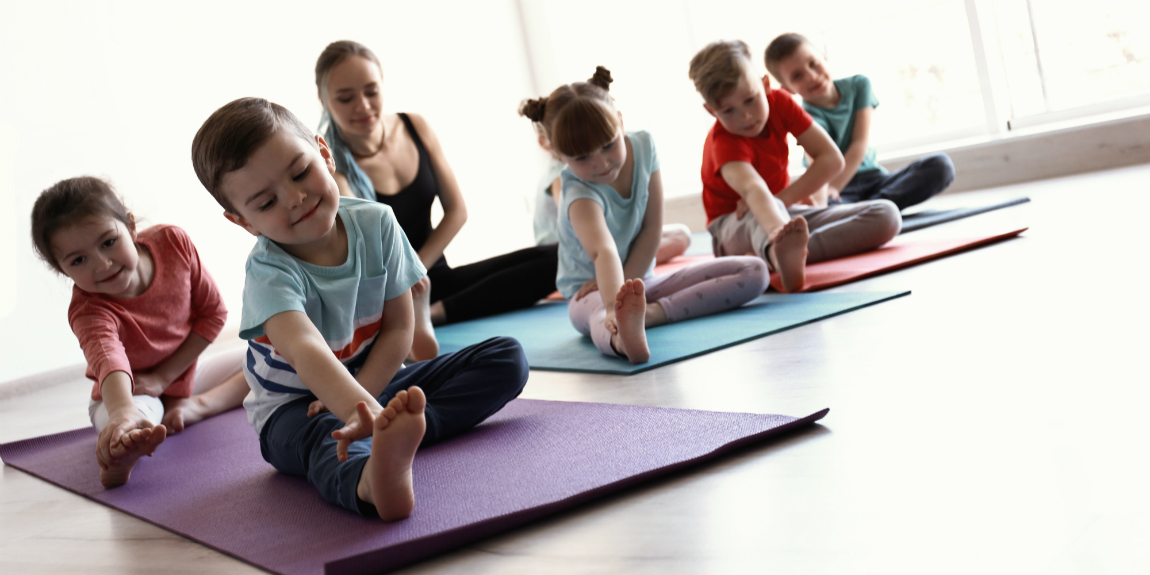
”Lapset kyllä osaavat joogata. Kyse on ennemminkin siitä että lapselle tarjotaan mahdollisuus siihen ja levitetään matto lattialle”, lasten joogaohjaaja Anne Slåen toteaa. Hänen mukaansa lasten jooga on ennen kaikkea suorittamisesta luopumista, kiireetöntä liikkumista, leikkimistä ja rauhoittumista ilman kilpailua ja vertaamista.

Jooga tarjoaa lapselle työkalun, jonka avulla hän voi tunnistaa kehon tuntemuksia. ”Olipa hyvä, että mä tulin tänne. Me pelattiin kotona vaikeaa tietokonepeliä ja mulla oli hepuli. Nyt olen ihan rentoutunut”, Slåen kertoo pienen joogaajan todenneen harjoituksen päätteeksi.

Tasapainoa tekemisen ja rauhoittumisen välillä

Lasten joogassa ei kuitenkaan ole kyse ainoastaan rauhoittumisesta vaan harjoituksessa on mukana aina myös toiminnallinen puoli. ”Lasten jooga ei ole pelkästään hiljentymistä satujen kautta. Siinä opetellaan leikin ja sadun avulla miten löydetään tasapaino liikkumisen ja rauhoittumisen välillä”, Slåen kuvailee.

Joskus lasten jooga saattaa myös herättää kysymyksiä liittyen esimerkiksi joogan ja uskonnon suhteeseen. ”Tällöin olen sanonut, että jooga on filosofia, jota voivat harjoittaa kaikenlaiset ihmiset maailmassa”, hän kertoo. ”Kaikki eivät ehkä tiedä mitä jooga on ja voivat arastella sitä sen takia”.

Lapset läsnäolon ja heittäytymisen opettajina

Slåen on työssään oppinut paljon pieniltä joogaajilta. Hänen mielestään lapset opettavat aikuisille hetkeen heittäytymistä ja läsnäolon taitoa. He eivät jää miettimään miten harjoituksen olisi kuulunut mennä vaan ottavat harjoituksen sellaisena kun se sillä hetkellä tulee.

Lapset opettavat myös irti päästämistä ja suorittamisesta luopumista. Aikuisten suorituskeskeisyys saattaa joskus näkyä lasten joogassa. ”Kannustan aikuisia antamaan lapsen olla ja tehdä harjoituksen omalla tavallaan”, Slåen muistuttaa ja kertoo tytöistä jotka osallistuivat erääseen harjoitukseen kuuntelemalla joogasatua omilla matoillaan maaten. Seuraavalla kerralla tytöt olivat taas innokkaina mukana kehollisessa harjoituksessa.

Lasten joogaohjaaja Anne Slåen toivoo voivansa välittää eteen päin sitä, että joogassa ei kilpailla siitä kuka on notkein tai voimakkain – jos jostain kilpaillaan, niin ainoastaan itseä vastaan.

Harjoituksen raamina selkeät säännöt

Tärkeää lasten joogassa on se, että lapsi tuntee olonsa turvalliseksi. Näin hän kykenee keskittymään itseensä ja voi tehdä oman harjoituksensa rauhassa. Turvallisuuden tunne syntyy mm. selkeistä pelisäännöistä. ”Joogasadun aikana ohjaan olemaan hiljaa ja keskittymään. On myös tärkeää, että jokainen pysyy omalla matolla. Matto antaa vilkkaammalle raamit rauhoittumiselle ja vetäytyvämmälle tilaa”, Slåen painottaa. Säännöt koskevat paitsi lapsia, myös perhejoogatunneilla mukana olevia vanhempia. ”Kun joogassa on vanhempia mukana, pyydän heitä olemaan neuvomatta tai korjaamatta omia lapsiaan”, Slåen kertoo.

Slåenin ohjaama lasten joogatunti etenee selkeän kaavan mukaan. Harjoitus aloitetaan joogasadulla, jota seuraa rentoutus. Lopuksi tunnelmaa vapautetaan tekemällä vaikkapa vuorovaikutusta kehittäviä leikkejä. Tällöin käytössä ovat esimerkiksi joogaopettaja Meri Mortin luomat värikkäät Eläinjooga -kortit.

Hyvä kiertämään

Slåenin mielestä palkitsevaa on se kun saa lapsen aidosti innostumaan harjoituksesta. Lasten jooga voi auttaa myös vähemmän liikkuvia lapsia löytämään liikunnan ilon. Lapset ovat nopeita oppimaan ja Slåen kertookin, että he jakavat harjoituksessa saamaansa tietoa esimerkiksi hengityksen tärkeydestä myös kotiin vanhemmille.

Anne Slåenin vetämä lasten joogaohjaajakoulutus Merijoogassa Espoossa (Barnyoga.com) 22.4-23.4.2017. Lasten joogaohjaajakoulutus ei liity Yoga Allianceen. Lue lisää täältä.

Yogoben aikaisempi kirjoitus lasten joogaohjaajakoulutuksesta luettavissa täältä.

Open post
Evening Routine - How To End Your Day Feeling Relaxed

Evening Routine - How To End Your Day Feeling Relaxed

01 huhtikuuta 2017 | Av
Yogobe

Regardless of how your day has been, give yourself a moment to wind down, reflect and let your body find peace. To go to sleep without a moment of relaxation may have a negative impact on your sleep and your body's opportunity to recover. So give yourself the chance to balance OFF and ON with a nice evening routine!

Create your own routine for a good nights sleep


Find a routine that suits you by trying different techniques. And try to keep it as long as possible. Let the parasympathetic nervous system help you to wind down and get a good start of a good night’s sleep. Pick and choose, and stay with the routines that works best for you!

  • Listen to some relaxing music
    Switch of the TV and put on some relaxing music that makes you feel good. Sit or lay down for a minute and listen. Choose soft and comforting music rather than the upbeat music before bedtime, though a moment of happy dancing will boost your mood and can also be helpful in order to release tension and stress.
  • Read a good book
    To read a good book can be a way to let go of nagging thoughts and let us become more present. Take a break and let the body relax.
  • Keep a journal
    Make some reflections of your day. Write down all your thoughts that are running loose in your mind. Put them on paper and it will be easier to slow them down. To write down our thoughts helps us to sort our emotions, ourselves as well as what’s only thoughts and that we don’t really need to react to. It can be an amazing way to get it all out before falling asleep. Also, write down what you are grateful for that day.
  • Drink a cup of tea
    Boil some water and enjoy a nice cup of tea while reading a book or listening to music. Choose a soothing herbal tea such as chamomile or rooibos, free from caffeine.
  • Enjoy a moment on the mat 
    To practice yoga in the evening helps you to relax and reduces stress levels before a good night’s sleep. Even a short session of yoga, meditation or breathing techniques can be enough to calm and balance the physical and mental.

    If you choose to practice a full yoga session, long or short, gentle and slow movements are to prefer. It will slow down and not trigger the body’s system. Yin yoga is perfect as we maintain each position for several minutes without putting pressure on the body in deep stretches. In yin yoga we look for a soft and gentle stretch where we can breath naturally and calmly.

    You can also choose restorative yoga; select a couple of positions, use bolsters, blankets and blocks, lying down as comfortable as possible in the position. We also maintain the position longer than in yin yoga. But the goal is not to stretch out the body, but to relax and soften up.

  • Legs against the wall
    If you choose one position, you should go for Viparita karani, legs up the wall. Highly recommended! It’s the most recuperating position you can practice. Lay down for 10-20 minutes and you will experience an amazing relaxation, simply a restorative pose. A few tips:

    • Put down a folded blanket or a bolster under the sacrum, just below the lumbar.
    • Put a strap around the thighs, low down and close to the hip, to be able to relax fully in your hips.
    • Place a bolster on the height against the wall to lean your leg against. If you have a strap around your thighs, attach it to the bolster as well. This is good in order to avoid overstretched knees and if backside thigh feels tight, among other things.
    • If it’s too difficult to focus, do a breathing exercise or repeat a mantra until you feel the calm inside of your.

  • Practice yoga in your bed
    There are certain relaxation and yoga nidra sequences that are adapted to falling asleep comfortambly. These can be done in bed so that you can fall asleep straight after.

Foto: yogahverdag.no

Calming yoga videos online 

Yogobe Video: bk92 Yogobe Video: fp68 Yogobe Video: g34u Yogobe Video: t24e

Relaxation exercises & Yoga Nidras

Yogobe Video: x2a5 Yogobe Video: a75e

Meditation practices online

Yogobe Video: 4s5p Yogobe Video: 6a8c

To be able to see the full video you need to be logged in as a paying member. New to Yogobe? Register to start your 14 days free trial here!

Open post
Jooga kuuluu myös lapsille

Jooga kuuluu myös lapsille

31 maaliskuuta 2017 | Av
Yogobe

Lasten joogaohjaajakoulutus saapuu keväällä Suomeen ja tuo joogan lasten ulottuville.

Lasten joogaohjaaja Anne Slåenin mukaan jooga kuuluu kaikille lapsille, heille pitää vain tarjota aika ja paikka joogalle. Tämä onkin syy, miksi Slåen haluaa tuoda Ruotsissa käymänsä lasten joogaohjaajakoulutuksen Suomeen.

Slåen toivoo lasten joogan löytävän eri paikkoihin kuten kouluihin, päiväkoteihin ja kerhoihin, jotta mahdollisimman moni lapsi voi sitä harrastaa. Hänen vetämänsä koulutus onkin tarkoitettu kaikille lasten kanssa työskenteleville ja toimiville. Se soveltuu kuitenkin myös vanhemmille ja isovanhemmille. Slåenin vetämän lasten joogaohjaajakoulutuksen on luonut Angelica Henriksson, joka vetää Barnyoga.com -koulutuksia Ruotsissa. Koulutuksessa opitaan ohjaamaan joogaa lapsille sadun kautta.

Lapsille tarkoitetun joogan suosio on lisääntynyt valtavasti Ruotsissa ja Slåen uskoo, että myös Suomessa suosio tulee kasvamaan. Hänen mielestään se on luonnollinen jatke sille, miten suosittua jooga on aikuisten keskuudessa. ”Ehkä myös sekin vaikuttaa suosion kasvuun, että jooga on laji mitä voi harrastaa helposti kotona lasten kanssa: vain joogamattojen levittäminen riittää”, Slåen pohtii.

Miten lasten jooga voi vaikuttaa lapseen?

  • Ylläpitää liikkuvuutta ja kohentaa ryhtiä
  • Kehittää voimaa, notkeutta ja tasapainoa
  • Tukee itsetuntoa, keskittymiskykyä sekä kykyä rentoutua
  • Opettaa kuuntelemaan omaa itseä
  • Ennaltaehkäisee ja vähentää stressiä
  • Auttaa tunnistamaan kehon tuntemuksia
  • Voi olla mielekäs lapsille, jotka eivät tykkää ryhmäliikunnasta; tarjoaa mahdollisuuden liikkua yksin, mutta seurassa
  • Keino löytää liikkumisen ilo

Anne Slåenin vetämä lasten joogaohjaajakoulutus Merijoogassa Espoossa (Barnyoga.com) 22.4-23.4.2017. Lasten joogaohjaajakoulutus ei liity Yoga Allianceen. Lue lisää täältä.

Open post
Yogobe tarjoaa kouluille hyvinvointia etäyhteydellä

Yogobe tarjoaa kouluille hyvinvointia etäyhteydellä

20 maaliskuuta 2017 | Av
Yogobe

Meidän tavoitteemme Yogobella on tukea oppilaita – lapsia ja nuoria – sekä heidän fyysistä ja henkistä hyvinvointiaan. Oletko kiinnostunut tuomaan liikettä ja rauhoittumista kouluunne tai tarjota lasten ja nuorten joogaa oppilaillesi ja heidän perheilleen? Kerromme tässä lisää siitä, miten Yogobe voi tukea hyvinvointityötä kouluissa.

Koronavirustilannetta koskeva päivitys 19.3.2020

Olemme erittäin poikkeuksellisessa tilanteessa juuri nyt. Suomalaiset koulut on suljettu ja iso osa lapsista jatkaa koulutyötään kotona. Tilanne voi herättää tunteen eristyneisyydestä ja yksinäisyydestä, ja kun lasten ja nuorten rutiinit häiriintyvät, voivat rauhattomuus ja ahdistus lisääntyä. Tilanne aiheuttaa huolta ja pelkoa siitä, mitä tulevassa tapahtuu ja siitä, sairastuuko itse tai joku läheisistä. Katsomme, että juuri nyt on tärkeämpää kuin koskaan ylläpitää terveellisiä tapoja ja rutiineja, jotta kaikkia esiin nousevia tunteita olisi mahdollista käsitellä.

Lasten ja nuorten jooga tukee sekä kehollista että henkistä hyvinvointia aivan samoin kuin jooga aikuisille. Lasten ja nuorten kehot ovat luonnostaan liikkuvia ja joogan liikkeet auttavat säilyttämään kehon liikkuvuutta sekä kehittämään mm. motoriikkaa ja tasapainoa. Jooga vahvistaa myös kykyä keskittyä ja voi tutkitusti vaikuttaa rauhattomuutta vähentäen ja lisätä kokemusta hyvinvoinnista.

Fyysinen aktiivisuus vahvistaa kykyä suoritua koulutyöstä (mm. aivojen verenkierron parantuessa), vähentää stressiä ja kohentaa mielialaa. Tämä puolestaan luo levollisempaa ilmapiiriä luokkahuoneeseen ja parantaa oppimisen edellytyksiä.

 Haluatko kokeilla helppoa, etäyhteyden välityksellä toimivaa tukea koulullesi tai tarjota sitä oppilaillesi ja heidän perheilleen? Tarjoamme kouluille ja opettajille mahdollisuuden kokeilla Yogoben palveluita ilmaiseksi 30 päivän ajan. Käyttämällä koodia YOGOBEKOULU saat kuukauden rajoittamattoman käyttöoikeuden Yogobelle. Luo tili täällä. Kun olet luonut tilin ja kirjautunut sille sisään, käy tutustumassa Yogobe Koulu -sivun räätälöityihin soittolistoihin.

Yhdessä voimme myös räätälöidä materiaalia ja ohjausta, joka vastaa ryhmän, luokan tai kotien tarpeita. Lisätietoja saat ottamalla meihin yhteyttä sähköpostitse skola@yogobe.com.

Vinkkejä videoista, jotka tukevat rentoutumista ja palautumista:

Yogobe Video: 35wr Yogobe Video: xb26
Open post
5 Things that will help you to yoga online

5 Things that will help you to yoga online

01 maaliskuuta 2017 | Av
Yogobe

Start practicing yoga at home! It doesn’t have to be a full yoga session, a bit of stretching with a few exercises to open up the body can do wonders. If you add up what 15 minutes per day would be in a year… It’s 5,475 minutes, a total of 91 hours, it doesn't have to be more than that! Leia Dehlin gives you the best tips and tricks on how to get started with yoga at home.

Tips for creating and keeping an online yoga practice


I find the mornings to work best for me and I often get the question where I get the energy from to get up and practice yoga. Ok, I admit, sometimes it’s not that easy to turn on the computer and drag myself to the yoga mat when there are other things tempting me. Here are a few things that help me to practice yoga at home regularly!

  • Always keep the yoga mat ready
    My place is small but I always keep my yoga mat out so that I can jump right on it whenever I want. It’s inviting and ready to be used. If you don’t have that possibility it’s a good idea to find a nice spot with enough space. For instance, find a spot with an empty wall that you can use if you want to do handstands or use the wall as support.
  • Same routine every day
    Routines are important and a way to maintain regularity in yoga. My alarm goes off at the same time every morning. You could try to get up 15 minutes earlier or do yoga just before you go to bed. Decide when you will do it, preferably the day before.
  • Choose a video and style in advance
    Ok, I don’t always do this but if I do, I save time on searching, becoming indecisive and can instead focus on my yoga. And it helps not to have to think too much when you just wake up. Find a few favorites to turn to when you can’t make up you’re mind. When I’m tired I do Yin Yoga, it’s almost like sleeping but gives you so much more =)
  • Put the excuses on the shelf
    “I don’t have time”, you might think. When I don’t have time for my yoga and meditation, then something is wrong. Then I’ve lost it, and it becomes an easy excuse to use when other things tempt you. But what is most important is to feel good and you need a moment for yourself every day.
  • Get to know yourself
    Of course there are some days and even periods when we need to sleep and rest instead. It’s important to get to know yourself and understand when laziness is taking over and when we actually need sleep or rest.

Further reading

Video recommendations

Yogobe Video: 4d7e Yogobe Video: 4s5p Yogobe Video: 3ad5 Yogobe Video: p75b

To see a whole video you need to be logged in as a paying Yogobe member. Haven't tried Yogobe before? Try it for free during 14 days – click here to get started right away!

Open post
Research: What Is Your Time Really Worth?

Research: What Is Your Time Really Worth?

01 maaliskuuta 2017 | Av
Yogobe

Are you in a unstoppable spiral where the days run together? Is it difficult to find the time to live between job, commuting, pickup and leaving, leisure activities and the never-ending pile of laundry? Here we discuss the research on Downshifting – less working hours and consuming less, to get more time for other things.


Jörgen Larsson is time researcher at the sociological institute at Gothenburg University. He has done research on time constraints and families with young children. He is of the opinion that downshifting has had a great impact. But why? We make more money than before, does that not bring us more freedom?

– My research results show that ownership and consumption contributes to time constraints. The more you own, the worse it gets, Jörgen Larsson says to the Swedish TV channel SVT.

Jörgen Larsson shows in his research study “On parents' time pressure”  that the total amount of working hours for a mother and a father with young children has increased with 10 hours per week the last 30 years. This, together with increased consumption levels, is the cause for our growing time pressure. The problem with having enough time is the fourth most common discussion topic during the break at the office.

The research study conducted by Jörgen Larsson, included 1500 people and reveals that when we earn and spend more, we also feel more time pressure. Mothers’ working hours have increased and it has not led to any compensation of shorter working hours for the fathers, which creates less opportunity for us to manage all parts of life.

Do you own your things - or do they own you?
In regards to consumption, Jörgen Larsson mentions Ghandi who suggested that if we own more than 50 things, the things own us. Jörgen believes that we need question our own choices and priorities, which he himself has done. Because he knows how it is when you can't find the time to actually live. In his previous well-paid and stimulating job as a environment consult the tempo just became more intensive, the job took all the energy and there was nothing left for the family.

To change lifestyle is not an easy thing to do, and it requires willpower to say no to time-consuming activities. But persistency prevails. Larsson downshifted and now feels he can live more balanced life as well as more environmentally friendly.

It’s not only our own actions and notions that stand in the way of downshifting. According to Larsson's time research, less people are willing to work fewer hours if others don’t do it. There is a strong full-time norm in our society. It's all planned for you to work 40 hours per week. Only parents with young children are seen as having the right to work less – others are seen as different.

Question the norms and your own expectations
The study “On parents' time pressure” reveals the most important reason to downshift: personal development and your health. So how do we do it? Larsson suggests that we look over our expectations of what we have to do in our everyday life. And it’s good to question the norms! Find quick ways to do some of the things, sleep and exercise, ask for help from family and friends, and pay for certain services, and we increase the resources and energy to keep up with our expectations.

In his book ”Rik på riktigt” (Rich for real), Jörgen Larsson offers some tips on how we can think to have more time, connected to our consumption. Reflect over his questions below before you make your next purchase:

  • Why do I really need this? Which needs does it fill?
  • Is it worth the money? Which values do I get by buying this? More meaning? More love? Happiness? Peace? Will it give me more power in my daily life?
  • What could I do instead (something else I would like to do) for the money?
  • How many hours work does it actually cost?

Energy boost

Yogobe Video: 7wn8 Yogobe Video: x2b5

Yogobe Video: ro8n Yogobe Video: 82179271
Open post
Prāṇa - does it really exist?

Prāṇa - does it really exist?

26 helmikuuta 2017 | Av

Sometimes we might expereince things that we can't really explain. This can be very confusing, and scary. When it comes to yoga philosophy there are many parts of this that might be difficult for our western minds to grasp, such as prāṇa, the energy of life. Simon Krohn, yoga teacher with an MA in philosophy, had one of these experiences, which took him on a journey within himself. Here he explains how we can understand life and open our minds through different approaches to different experiences. 


To experience something you don't really belive in

The base of my spine began to rumble. The feeling grew and it began to feel like an earthquake. Then the craziest thing happened. It was like an explosion at the base of the spine and it felt like the whole spine had turned into a volcano. I felt something shoot up through it and as if a golden, electric fountain erupted out through the top of my head. It only lasted for a couple of seconds, but it sent me on an intense existential journey that would last around a year.

The first two weeks after the incident I went in and out of an extraordinary state of awareness, where it felt like my sense of self had dissolved completely. In that state I felt blissful. However, as time went by I got more and more afraid. The thing was, I had no way to understand or process, what was going on. Obviously, I could read about it and I could easily recognize my experience in the old Indian Haṭha yoga texts. I read that I had experienced something called a Kuṇḍalinī-rise, which was described as a divine form of energy (prāṇa). This, however, did not help me much. I simply did not believe in these words. They were too foreign and they contradicted my western worldview. So basically I was having experiences of something that I did not believe in, and so the fear of loosing my mind grew.

Eventually I calmed down again and after a year the drama was over. Nevertheless, I kept studying the topic and came to realize that a major part of my Kuṇḍalinī crisis came from a problematic, rigid western approach to the experience. The point of this blog post (in fact my first blog post ever) is to share my understanding of the Indian concept prāṇa.

Different approaches
The Indian yoga tradition is based on the experience of yogis; most of the descriptions that you can find in the ancient texts can be traced back to personal experience. This sounds straight forward, but it raises an important question, whether we should regard these descriptions as ‘experiences of reality’ or ‘real experiences’?

If you take the descriptions of yoga literally and consider them to be descriptions of an objective reality, then you are taking an ontological approach to them. On the other hand, if you just consider them to be descriptions of actual experiences, then you are taking a phenomenological approach.

This may sound like a purely technical distinction, but the difference is great. Let us take an example. If you wished to know how many bones you have in your body, you would probably look it up on Wikipedia or in an anatomy book. In any case you would certainly look for the answer outside yourself. This is an ontological approach, which means that it does not rely on your personal experience. Just for fun, you could also try a phenomenological approach. Simply close your eyes and try to feel how many bones you have in your body. Exactly. It is weird and fruitless.

On the contrary if you wished to understand a concept like ‘love’, then a purely ontological approach would soon be equally weird. No doubt it can be interesting to read about oxytocin and neurotransmitters, but it seems somehow to miss the point, and it will not help you to understand a love poem. My point is simply that certain aspects of life are best understood ontologically while other aspects are best understood phenomenological, and the Indian concept of prāṇa is in my opinion clearly in the same category as ‘love’.

Increased prāṇa – expanded awareness
Prāṇa can basically refer to any experience of intensity and flow. It is the softening you feel when you take a deep breath. It is the buzz you feel, when you are nervous, and it is the build up you feel, when you are getting near to an orgasm. These are very normal experiences, and the best way to really know them is by taking a deep breath, go to an exam and having sex. To ask whether these experiences actually exist would be truly odd. 

With the development of Haṭha yoga prāṇa became an important concept. The yogis discovered an interesting connection between awareness and prāṇa. Every time the mind becomes quiet and awareness seems to expand, there is also a sensation of increased intensity and flow. Furthermore the yogis discovered that the door swings both ways. By forcefully turning up the intensity and flow, they found that they could actually calm the mind and expand awareness. Thus the experience of increased prāṇa became an important component in the spiritual progress. ‘Haṭha’ literally means ‘force’, and the traditional Haṭha yoga is primarily concerned with techniques that create and control these sensations of intensity and flow.

What is real, and what is not?
For the old yogis the whole process of yoga was something that takes place inside your self within your own experience. So to ask what prāṇa really is outside of our experience would seem weird to them. Unfortunately this is how most of us relate to prāṇa these days, and then the ontological questions arise. What is prāṇa really? Can it be measured? Do you even believe that prāṇa exists?

This is not just a matter of philosophy. It is also important for two very practical reasons. Firstly, the ontological understanding is always static, and when you try to create a fixed understanding of something that flows, your mind will fail. It seems that the best way to achieve the feeling of flow is to stay open, and as soon as you try to understand, what it is, then something shuts down and the flow stops. Secondly, trying to make ontological sense of a prāṇa experience can be downright scary. This is what I experienced. A clash of worldviews that made my mind freak out, because the mind does not like to be unsure of what is real and what is not.

So there it is. I personally don’t believe in prāṇa or Kuṇḍalinī in an ontological sense. But I most certainly believe in them as very real experiences, and I use the practical wisdom from the Haṭha yoga every day to create more peace and flow in my life.

Read more

Video recommendations

Yogobe Video: 34xsYogobe Video: f86tYogobe Video: bw83Yogobe Video: atp9

Open post